







The "Coalición Española de Enfermedades Tropicales Desatendidas" is born
The "Coalición Española de Enfermedades Tropicales Desatendidas" is born
February 2, 2026
Fundación Probitas has joined the newly created Spanish Coalition for Neglected Tropical Diseases (CEETD), an alliance that brings together civil society organizations, scientific institutions, and both public and private entities to coordinate the response to diseases that affect more than one billion people worldwide.
With the creation of the first Spanish Coalition for Neglected Tropical Diseases (CEETD), Spain is taking a decisive step in its commitment to global health. Similar initiatives already exist in countries such as Canada, Japan, Germany, and the United Kingdom, addressing diseases that continue to silently afflict populations systematically left behind by health policies and resources.
Neglected Tropical Diseases (NTDs) are not solely a medical issue. Above all, they represent a question of social justice, as these diseases are concentrated in impoverished communities where access to healthcare is limited. NTDs perpetuate cycles of poverty, stigma, and exclusion that are passed from generation to generation. Combating them, therefore, means alleviating preventable suffering, protecting human dignity, and upholding the right to health.
In this context, Spain is well positioned to contribute in a sustained way to the control and elimination of these diseases, thanks to its leadership in international cooperation, its scientific capacity, and historic ties with regions especially affected, such as Africa and Latin America. This leadership was underscored last November with the approval of a Non-Legislative Proposal against Neglected Tropical Diseases, calling on the Spanish Agency for International Development Cooperation (AECID) to prioritize this global health challenge.
To coordinate a joint national response, the CEETD was officially launched at the Instituto de Salud Carlos III (ISCIII) on January 29, on the eve of World NTD Day (one of the 15 official global health days recognized by the World Health Organization). The creation of this platform responds to the urgent need to strengthen global health governance at a time marked by the withdrawal of international funding and financial uncertainty.
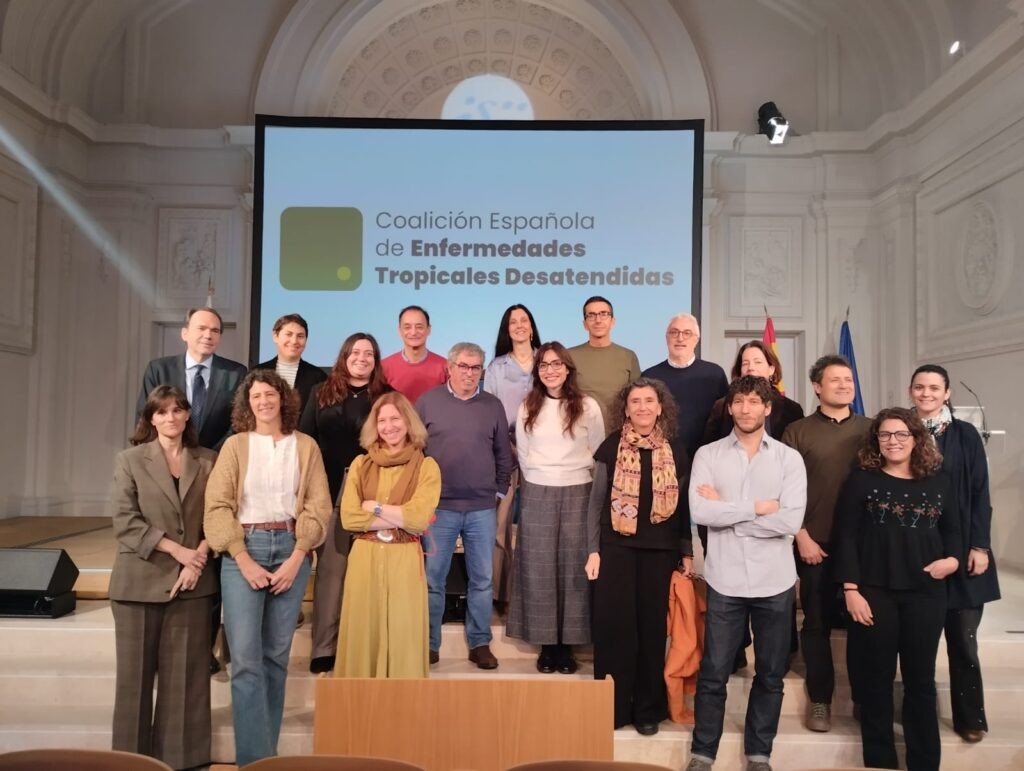
Probitas: An Active Participant in the Coalition
Probitas has joined this initiative led by Fundación Anesvad—a benchmark advocate of the Right to Health with over half a century of experience—and which also has the committed support of leading institutions such as the Instituto de Salud Carlos III (ISCIII), ISGlobal (Barcelona Institute for Global Health), Mundo Sano, Medicusmundi, and the technology company SPOTLAB.
This collective effort is further strengthened by the clinical and research excellence of Hospital Universitario La Paz, Hospital Universitario Ramón y Cajal, and Hospital Universitari Vall d’Hebron, together with the research capabilities of GSK. The alliance also integrates the specialist expertise of the Spanish Society of Infectious Diseases and Clinical Microbiology (SEIMC), the Spanish Society of Tropical Medicine and International Health (SEMTSI), and the strategic support of Anis (Health Reporters’ Association). Together, these organizations are joining forces to build capacity and strengthen public health systems to tackle these diseases.
As Dr. Anna Veiga, Director of Fundación Probitas, points out: “As part of the coalition, Probitas will help raise political awareness, improve the development of diagnostic methods and treatments, and support the implementation of programs and policies that, at the community level, enable affected populations to access healthcare.”
A Comprehensive Response
During the launch, experts from ISCIII and the Spanish Society of Tropical Medicine and International Health (SEMTSI) emphasized that NTDs are also present within Spain’s own public health landscape. Here, autochthonous diseases—such as leishmaniasis, hydatidosis, or scabies—coexist with imported conditions like Chagas disease or Hansen’s disease, and there is a growing risk of the emergence of diseases such as dengue. This reality underscores the need for a coordinated response to protect people’s health both inside and beyond our borders.
To ensure that this strategy has a real and lasting impact, the Coalition actively participates in international networks, aligning its efforts with the World Health Organization’s 2030 Roadmap and the Sustainable Development Goals (SDGs). From this perspective, the fight against NTDs is not only an effective investment but a commitment to reducing inequalities, preventing avoidable suffering, and advancing towards a fairer global health landscape.
The coalition firmly believes that eradicating these diseases is a complex challenge that cannot be addressed from a single front. It requires sustained, multisectoral action—integrating scientific research, robust public policy, international cooperation, and private sector engagement.